Webinar: EMG in Applied Sport – Real World Case Studies
EMG in Applied Sport - Real World Case Studies
As EMG continues to gain traction in applied sport, practitioners are increasingly exploring how it can support their assessments, rehabilitation and performance programmes. With this growing interest come questions from those newer to EMG such as: When is EMG most valuable? How are practitioners integrating it into their existing protocols? And what insights are they gaining from its use?
Join us for a webinar featuring real-world case studies from leading researchers and practitioners working in elite sport. Through practical examples, our speakers will share how they’re using EMG, what they’ve learned, and how these insights can add value and inform decision-making in real-world settings. Whether you’re already using EMG or exploring its potential, this webinar offers an opportunity to learn from their experiences and discover new ways to incorporate EMG into your own practice.
What to Expect
- Insights from leading practitioners and researchers working in elite sport and sports rehabilitation.
- Understanding when, why and how EMG is used in practice, including the rationale behind its inclusion in assessment and monitoring protocols.
- Real-world case studies demonstrating the value EMG can add to rehabilitation, performance assessment and decision-making.
- Practical insights and lessons learned from experienced EMG users to help inform its application in your own practice.
Program to Be Announced
Program
10:00 – 10:05 AM
Introduction
Introduction
Nick Tocco, Junior Product Manager, Delsys
Welcome to the Delsys webinar, EMG Advances in Neurophysiology. In this session, researchers from across the world will share their latest findings on how advances in EMG technology are helping us better understand the neural control of movement. From uncovering motor-unit behaviour during strength training and movement to examining gait, neurological disorders, and rehabilitation; we’ll explore the diverse applications of EMG in neurophysiology research.
10:05 – 10:30 AM
From Neural Drive to Motor-Unit Output: Using dEMG to Understand the Neural Adaptations to Strength Training
From Neural Drive to Motor-Unit Output: Using dEMG to Understand the Neural Adaptations to Strength Training
Dr. Dawnson Kidgell, Exercise Neuroplasticity Research Unit, Monash University, Australia
Decomposed surface electromyography (dEMG) provides a unique opportunity to examine how individual motor units contribute to force production and adapt to long-term resistance training. In this webinar, I will present recent data comparing resistance-trained and untrained adults, in whom we identified more than 6,000 motor-unit observations across contractions ranging from 10 to 70% of maximal voluntary force. Resistance-trained individuals demonstrated higher motor-unit discharge rates at moderate-to-high contraction intensities and lower discharge-rate variability at higher forces.
I will discuss how these dEMG findings can be integrated with measures of corticospinal excitability to better understand how adaptations across the motor system are ultimately expressed at the level of the motoneuron pool and contribute to human strength.
10:30 – 11:00 AM
Neurophysiology in Motion: Exploring Neural Control with EMG and Stimulation
Neurophysiology in Motion: Exploring Neural Control with EMG and Stimulation
Dr. Jennifer Davies, School of Healthcare Sciences, Cardiff University, UK
EMG is often used to describe muscle activation during movement, but it can also provide a window into the neural processes that control that movement. In this presentation, I will discuss how our group uses surface EMG alongside stimulation at different levels of the nervous system to investigate the neural control of walking.
Using examples from recent studies, I will show how stimulus-evoked EMG responses can be used to probe neural mechanisms controlling movement. This will include measuring motor evoked potentials during transcranial magnetic stimulation (TMS) to investigate changes in corticospinal excitability when walking is destabilised and examining modulation of the nociceptive withdrawal reflex across the gait cycle.
The presentation will consider what these approaches can tell us about the neural mechanisms underpinning movement, alongside some of the practical challenges of obtaining and interpreting neurophysiological measures during whole-body movement.
11:00 – 11:30 AMLess Flexible, Not Weaker: Motor Unit Firing in Children with DCD
Dr. Maaike Esselaar, Saarland University, Germany and Manchester Metropolitan University, UK
Children with DCD can often struggle to produce skilled movement but can produce a steady grip, so what is different at the level of the muscle? Using Delsys HD-EMG, we decomposed motor-unit activity during low-force grip contractions in children with and without DCD, allowing us to look at the different strategies they use to produce the same force.
Looking ahead, I’ll discuss how the same approach could be applied to peripheral neuropathy, where altered motor-unit behaviour may relate to everyday problems such as pedal control when driving.
11:30 – 11:55 AMActivity-dependent adaptive deep brain stimulation improves gait in Parkinson's disease
Dr. Valeria de Seta, NeuroRestore, École Polytechnique Fédérale de Lausanne (EPFL) & Lausanne University Hospital (CHUV), Switzerland
Advanced Parkinson’s disease (PD) leads to a spectrum of locomotor deficits, including heterogeneous gait abnormalities and freezing of gait, that remain poorly addressed by standard treatments. Unlike cardinal motor symptoms (i.e., tremor, rigidity and slowness of movement), conventional deep brain stimulation (DBS) often displays variable and sometimes detrimental efficacy for locomotor deficits. This inconsistent efficacy may stem from the episodic and context-dependent nature of gait disturbances, often further exacerbated by fatigue. Approaches that dynamically adjust stimulation in real time, aligned with gait dynamics, may more effectively alleviate these deficits.
In our feasibility study, we investigated the safety and efficacy of activity-dependent adaptive DBS in four participants with advanced PD and disabling gait impairments. By combining local field potential (LFP) recordings, electromyography (EMG), and inertial measurement unit (IMU) data, we identified personalised neural signatures associated with different locomotor states, including sitting, standing, walking, and obstacle avoidance.
We then used these signatures to enable real-time adjustments to DBS amplitude according to each participant’s ongoing activity. We compared this approach with conventional DBS using clinical gait assessments, muscular and kinematic measurements, and participant feedback. Our findings demonstrate the feasibility and therapeutic potential of activity-dependent adaptive DBS for addressing gait impairments in Parkinson’s disease.
11:55- 12:00 PMClosing Remarks
Nick Tocco, Junior Product Manager, Delsys
The webinar will conclude with a few closing remarks and a thank you to our speakers and attendees.
Speakers

Bryan Heiderscheit
Prescribed Isn't Received: Using EMG to Verify Activation and Guide NMES in Rehabilitation
About Bryan
Frederick Gaenslen Professor in Orthopedics & Vice Chair of Research University of Wisconsin–Madison
Bryan Heiderscheit, PT, PhD, FAPTA is the Frederick Gaenslen Professor in Orthopedics and Vice Chair of Research for the Department of Orthopedics and Rehabilitation at the University of Wisconsin. He is the founding Director of Badger Athletic Performance with UW Athletics and founding Director of the UW Health Runners’ Clinic. Dr. Heiderscheit’s clinical practice and research involve orthopedic conditions, with particular focus on lower extremity sports-related injuries. Support for his research includes the NIH, NFL, NBA and GE HealthCare. He is a team physical therapist with UW Athletics, a member of the NFL Soft Tissue Injury Task Force, and an advisor to several collegiate and professional sports organizations.
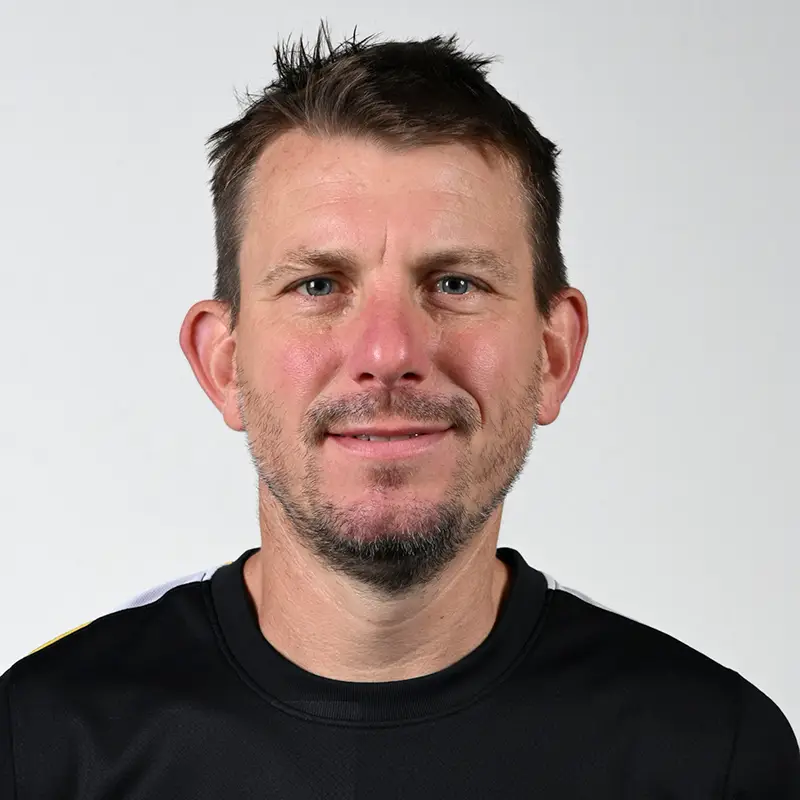
Ben Macdonald
Using EMG to Understand Exercise Prescription and Enhance Hamstring Rehab Design
About Ben
Performance Rehabilitation Physio for Chelsea FC
Ben has spent the past 6 seasons working in Premier League Football. Currently Performance Rehabilitation Physio for Chelsea FC, having previously been Head of Physiotherapy at Wolves FC. Prior to this he was Head Physio for British Cycling for the Tokyo Olympic Cycle, and Senior physio for British Athletics during the Rio Olympic Cycle, where his specific remit was to develop the rehabilitation protocols associated with the BAMIC diagnostic system and deliver a number of projects related to hamstring injury prevention and management. His career in Professional Sport started at Worcester Warriors Rugby where he became Head of Medical Services. Ben completed his MSc in Sports Physiotherapy at Bath University in 2011 and has been a part time tutor on the course since.